 EN
EN 
What is Site Concrete Pouring? A Look from Foundation to Finish
At Zeminparlatma.com.tr, we understand the importance of sturdy and functional floors. Site concrete pouring, indispensable for many industrial facilities, warehouses, parking lots, and commercial areas, forms the foundation of structures' durability and longevity. So, what exactly is site concrete pouring, and why is it so critical?
Site concrete pouring is the process of covering large areas of flooring with concrete to a specific thickness and strength. This process is applied to increase the load-bearing capacity of the floor, provide a smooth surface, and create a stable platform for activities that will take place on it. Site concrete pouring performed with a professional approach delivers high-performance and problem-free floors.
Stages of Site Concrete Pouring: A Step-by-Step Journey to the Perfect Floor
The site concrete pouring process consists of many stages requiring meticulousness and expertise. Each stage directly affects the quality of the final product. Here are the main stages:
1. Subgrade Preparation and Infrastructure Creation
- Ground Survey and Leveling: The area where the application will be made is thoroughly examined. The ground is brought to the appropriate elevation and slope values with necessary excavation or filling operations.
- Sub-base and Base Layer Application: To increase the ground's load-bearing capacity and ensure homogeneous distribution, a sub-layer is created with materials such as crushed stone or gravel. This layer is compacted.
- Moisture Barrier and Insulation: An appropriate moisture barrier, such as a polyethylene sheet, is laid to prevent moisture from the ground reaching the concrete.
- Welded Wire Mesh Laying: Designed welded wire mesh reinforcements are laid and tied to increase the concrete's crack resistance and strengthen its load-bearing capacity.
- Formwork Installation: Sturdy formwork (usually wood or metal) is installed to define the boundaries of the area where concrete will be poured and to ensure the concrete is poured to the desired thickness.
2. Concrete Pouring and Compaction
- Determination of Concrete Class: The appropriate concrete class (e.g., C25/30, C30/37) is selected based on project requirements and the loads the floor will bear, and then brought to the site.
- Pouring Process: Concrete is typically poured uniformly into the designated area using a concrete pump or transit mixer. During pouring, care is taken to prevent segregation of the concrete and the formation of air voids.
- Vibration and Compaction: The poured concrete is compacted with the help of vibrators. This process removes air voids within the concrete, making it denser and stronger.
3. Surface Finishing and Curing
- Surface Leveling (Screeding): The poured concrete surface is brought to a smooth and desired elevation using screeds or laser screed machines.
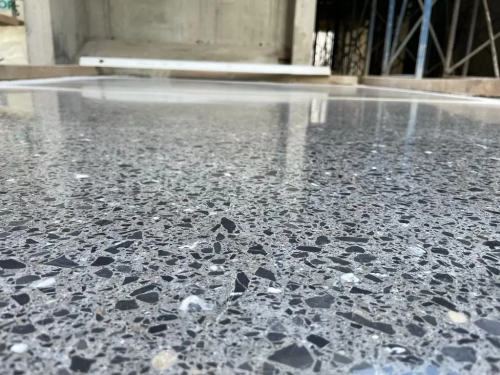
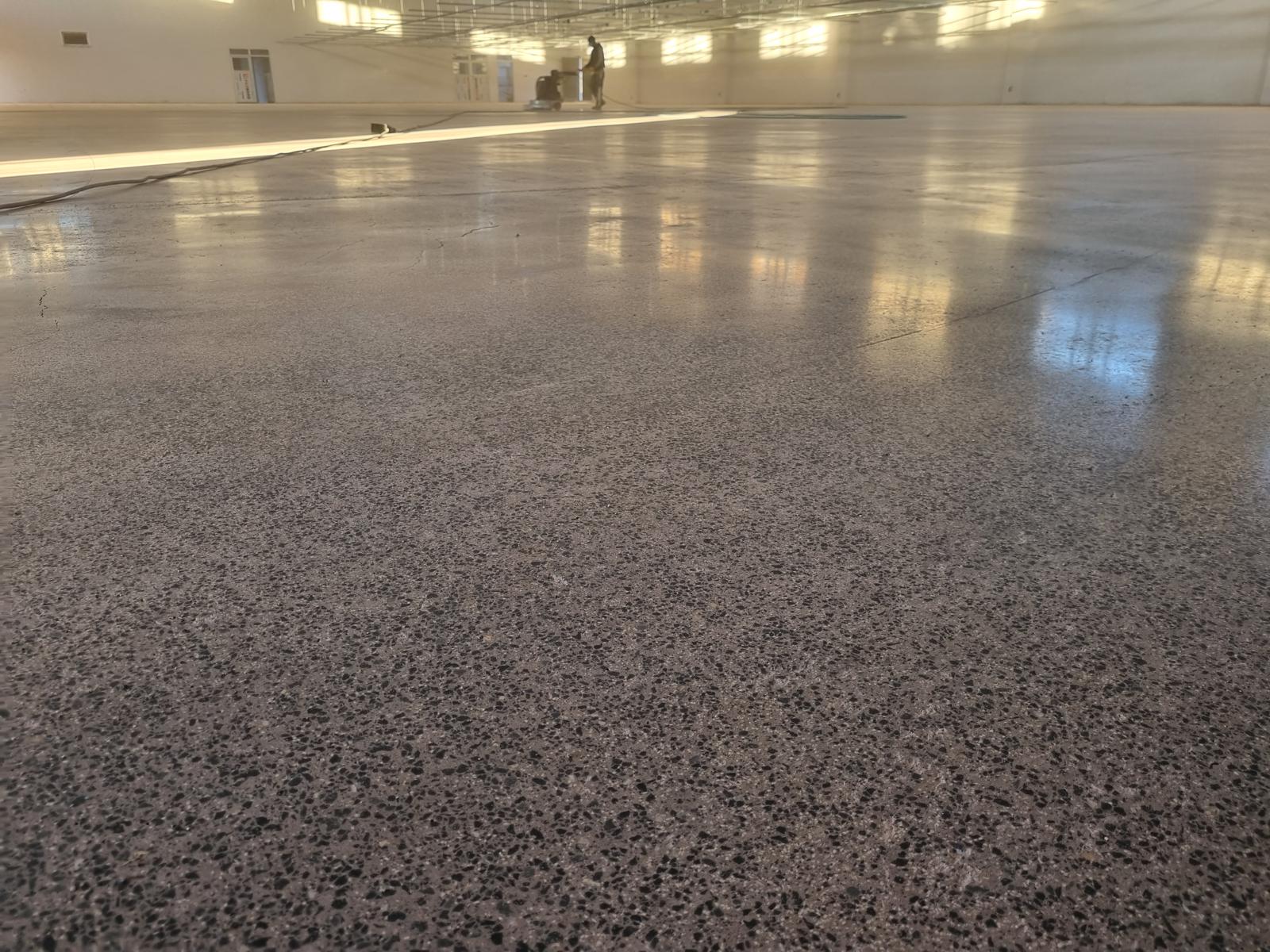
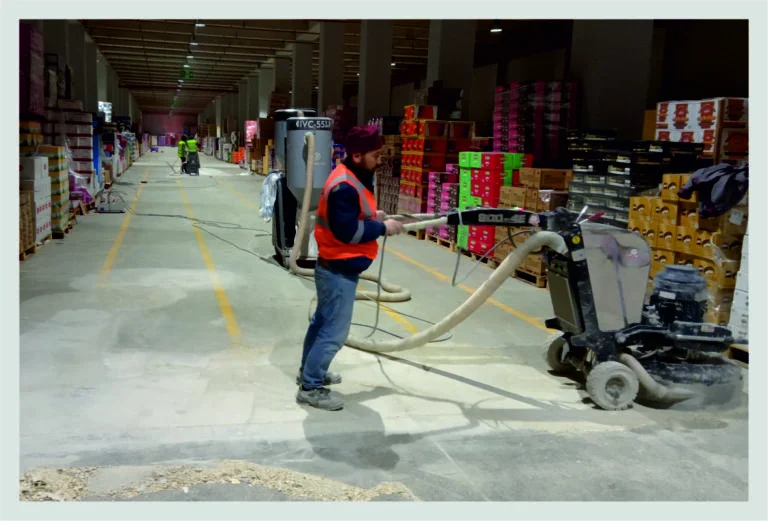
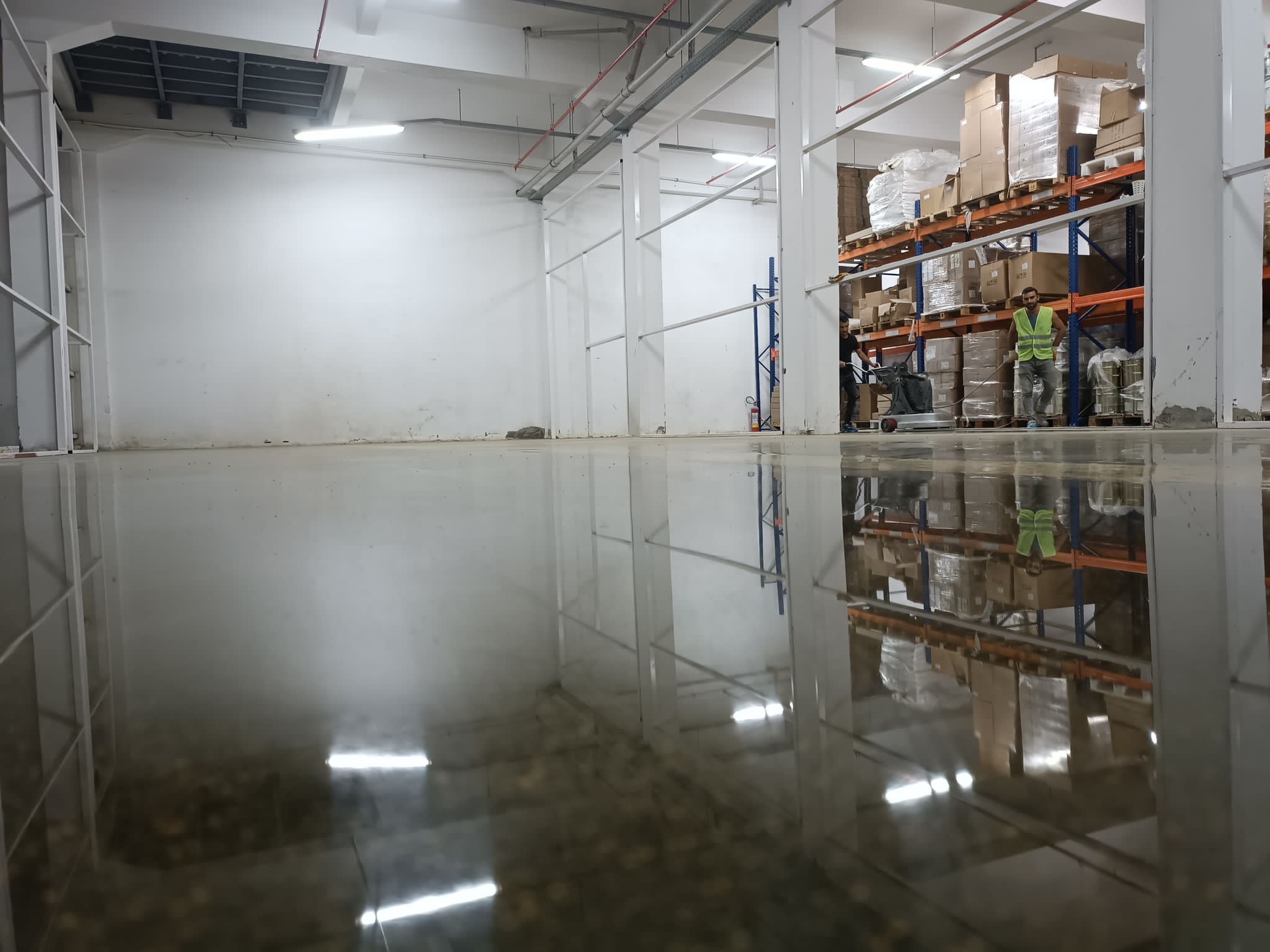
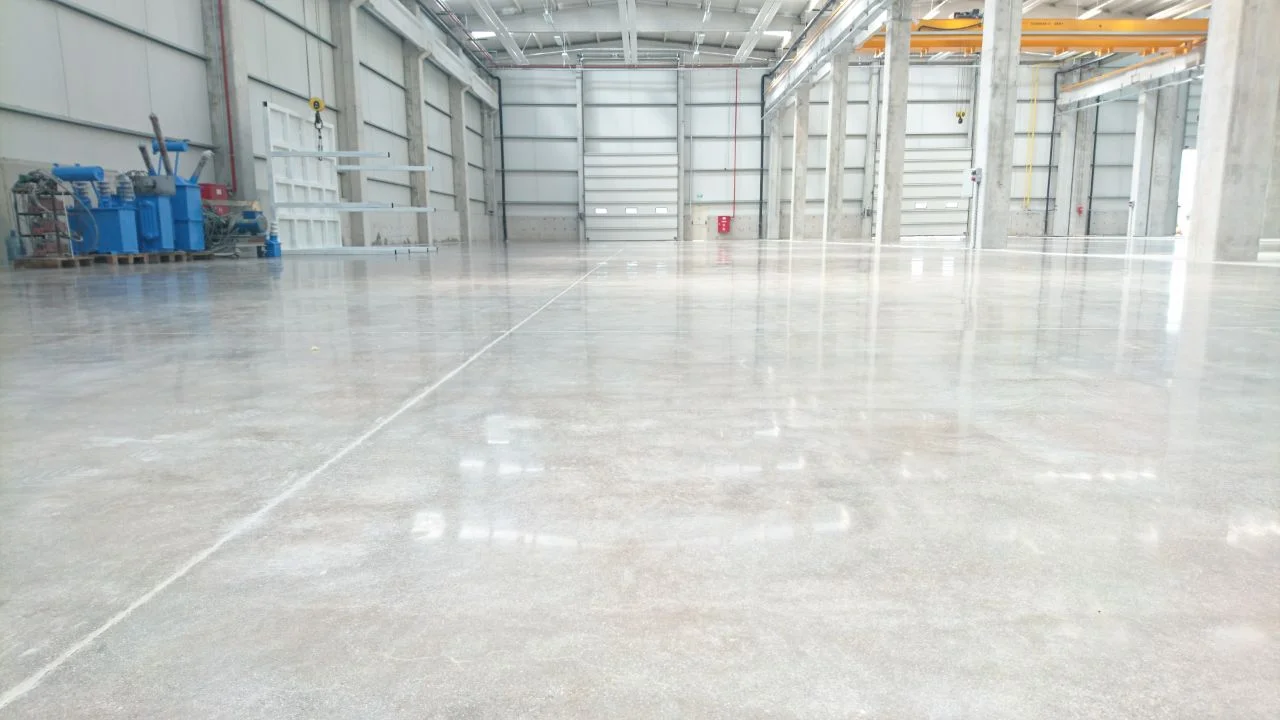
- Troweling (Power Troweling): Power trowel machines (helicopter trowels) are used to achieve a smooth, wear-resistant, and aesthetically pleasing concrete surface. This process should be done at the right time and with the correct technique after the concrete begins to set.
- Joint Cutting: To prevent cracking due to concrete expansion and contraction, control joints are cut at regular intervals with joint cutting machines. These joints are later filled with appropriate joint filler materials.
- Curing Application: Curing compounds are sprayed or the surface is covered with wet burlap sacks to prevent rapid water loss from the concrete, support strength development, and prevent cracking. Curing is vital for concrete quality and should be maintained for at least 7 days.
Points to Consider in Site Concrete Pouring
- Expert Team and Equipment: Site concrete pouring requires an experienced and professional team with modern equipment.
- Quality Material Selection: It is essential that the concrete class, welded wire mesh, and all other materials used are of high quality and conform to standards.
- Weather Conditions: Adverse weather conditions such as extreme heat, cold, rain, or wind during and after the pouring process can negatively affect the concrete. Necessary precautions must be taken.
- Inspection and Quality Control: Regular inspections and quality control tests should be performed throughout the process.
Why Should You Choose Professional Site Concrete Pouring?
A correctly applied site concrete floor offers numerous advantages for your business:
- High Durability: Floors resistant to heavy loads, impacts, and abrasion.
- Long Lifespan: Years of trouble-free use with minimum maintenance.
- Smooth Surface: Ensures more efficient operation of transport vehicles like forklifts, increasing occupational safety.
- Hygiene and Ease of Cleaning: Smooth surfaces make cleaning easier.
- Aesthetic Appearance: A modern and stylish look is achieved with professional troweling.
As Zeminparlatma.com.tr, we offer long-lasting and high-performance site concrete solutions best suited to your project needs. With our expert team and quality materials, we guarantee the best application for your floor.